DESIGNING A NEW BUSINESS LINE FOR AN AI PLATFORM
Platform
Mobile
My role
Workshop Facilitation, Information Architecture, UX/UI Design
Team
Product Manager, Product marketing manager, UX/UI Designer, Engineers
Sector
Technology

CHALLENGE
Cogniflow is an AI Machine Learning Platform and needed to create a new line of business called Cogninotes to market its assistant and speech recognition service.
The challenge was to determine which value proposition, offer, revenue model, and sales channel will work for this new line of business. And so allow the business to be desirable for customers, financially viable for stakeholders, and feasible to build and deliver to the world.
01. IDENTIFY THE BUSINESS
I combined a traditional business strategy with design thinking methods to design rapid prototypes to test and iterate business concepts. I started facilitating a collaborative workshop with the product team to visualize the different parts of the business and then progressed through to rapid iterative prototyping, and collecting evidence to evolve the business model.
THINKING PROCESS
Combining business strategy with design thinking
The process combines traditional business strategy with the methods and mindsets of design thinking and prototypes three parts of a business—value proposition and offer, revenue model, and sales channel.

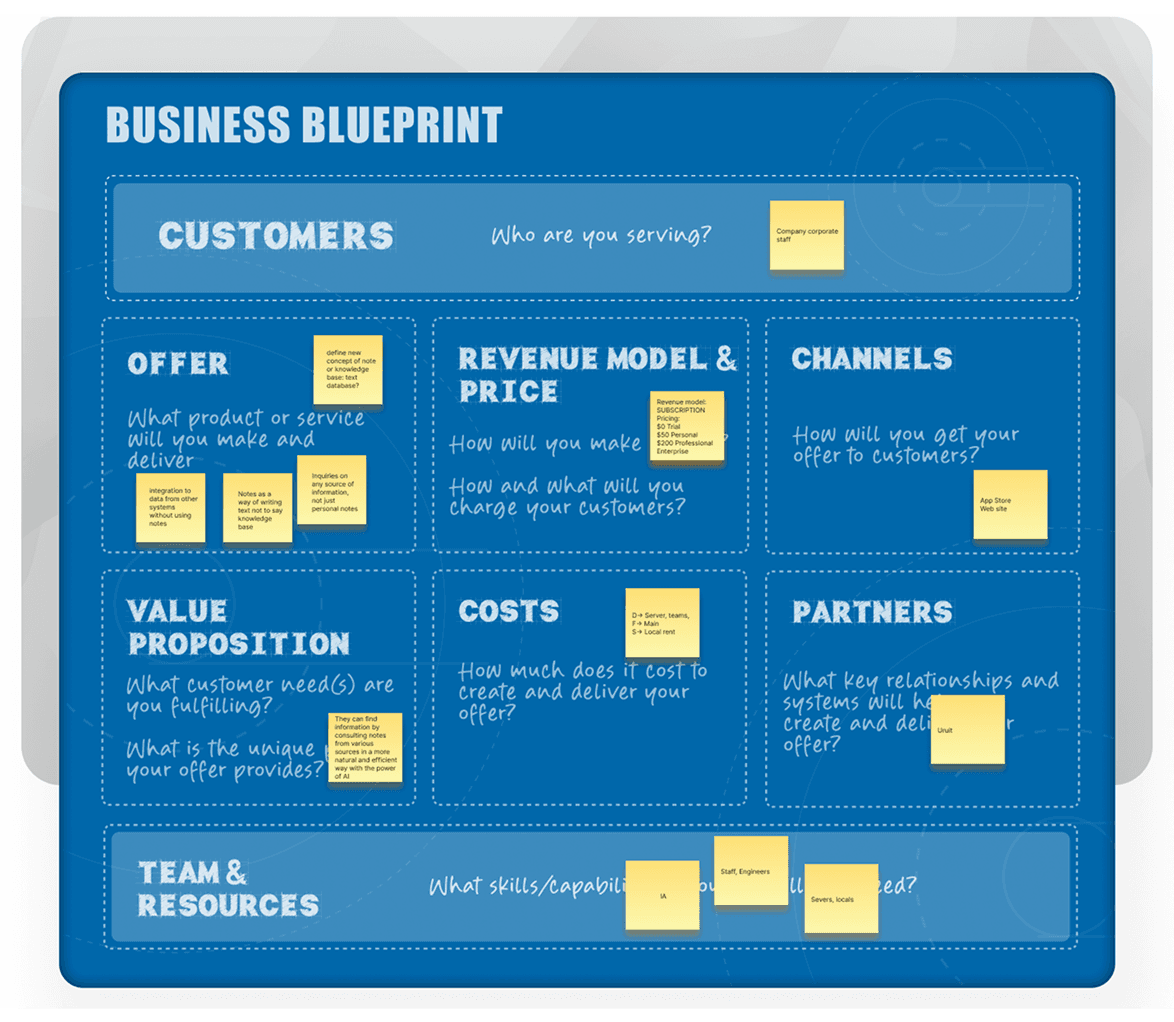
BUSINESS BLUEPRINT
Business components brainstorming.
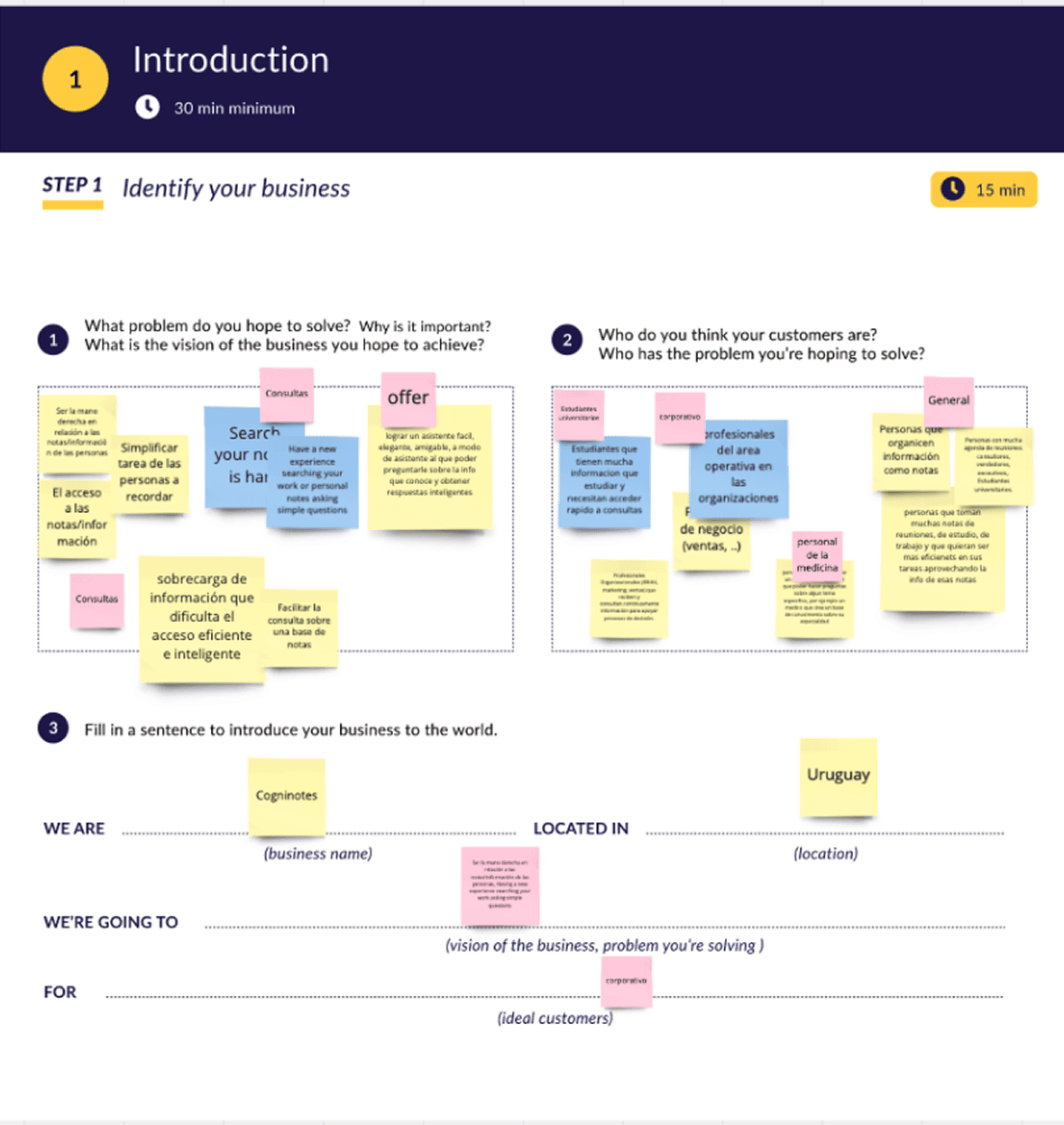
I facilitated brainstorming to identify the business. First, get the team thinking about the problem you’re trying to solve and who it will most benefit.
I then instructed the team to fill in the elements of the Business blueprint regardless of whether they were assumptions or something they knew because, at this early stage, it was not necessary to know everything as we were going to refine it through iterations using the design thinking approach.
02. VALUE PROPOSITION & OFFER DESIGN
In this step, de goal is to design the value proposition that is the essence of business. Also identify different forms of the value proposition that are insightful, unique, and targeted. And finally, propose an idea for a compelling product or service (offer) that ties closely to the value proposition.
VALUE PROPOSITION DESIGN
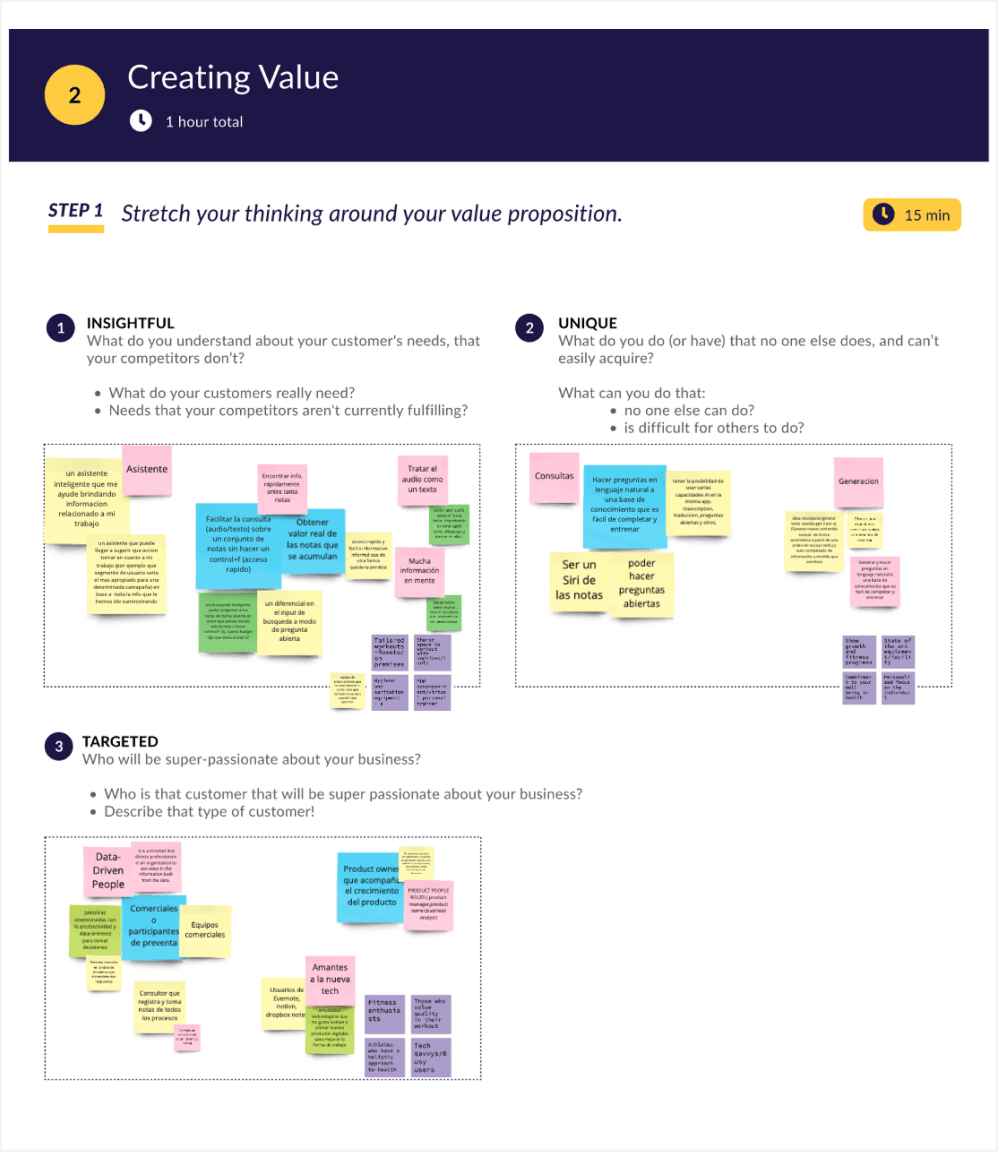
Value proposition brainstorming
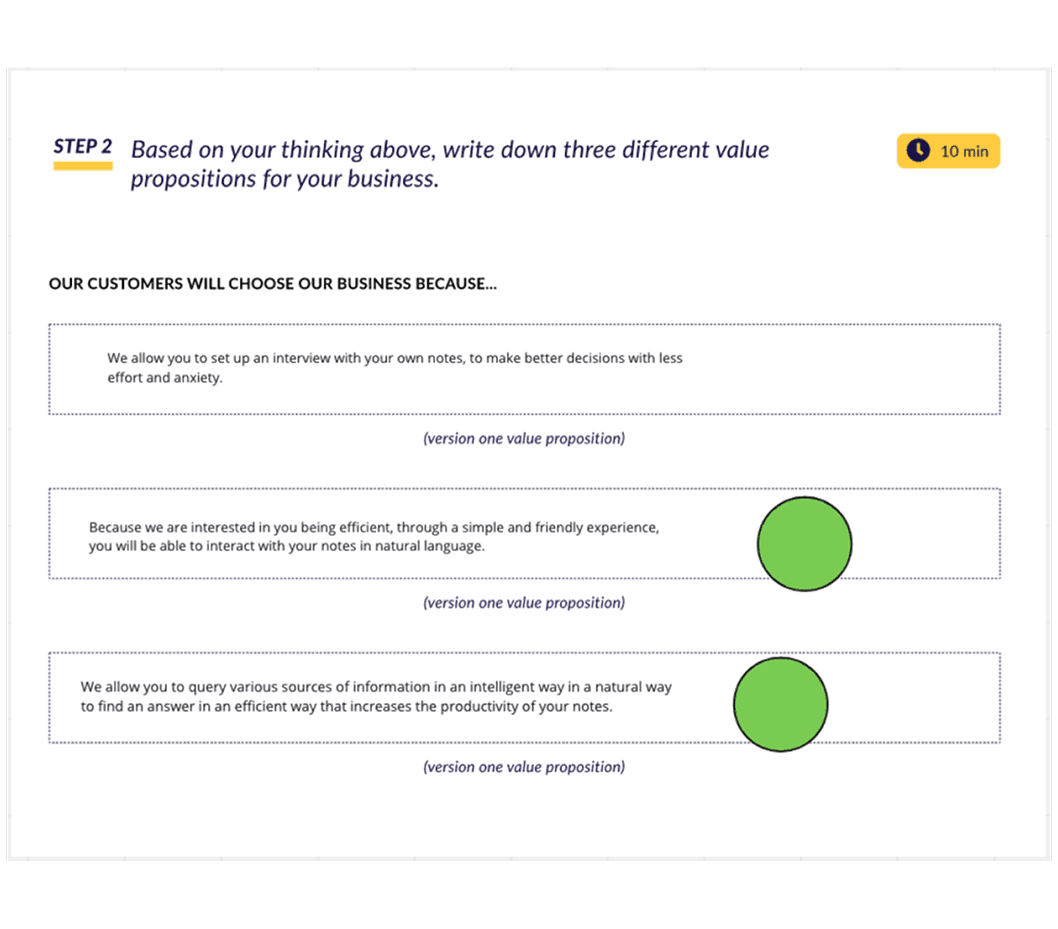
Facilitate a brainstorming section to define various value propositions. To do this, I motivated the multidisciplinary group to think of proposals that are: Insightful that represent deep familiarity or insight into the people you serve and meet their functional and emotional needs. Unique, that points to something that we—and only we—can provide. Targeted to people who will fallen in love with a value proposition. I then put the proposals to a vote and two proposals remained.
Prototyping and testing value proposition
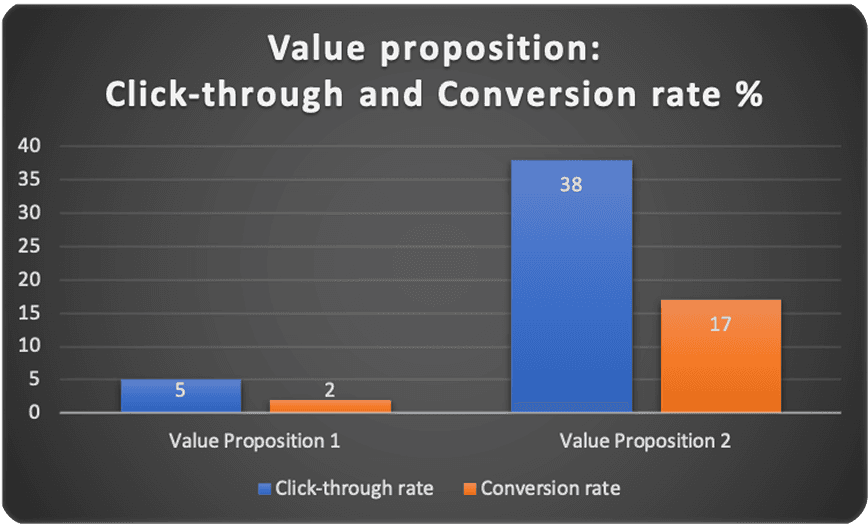
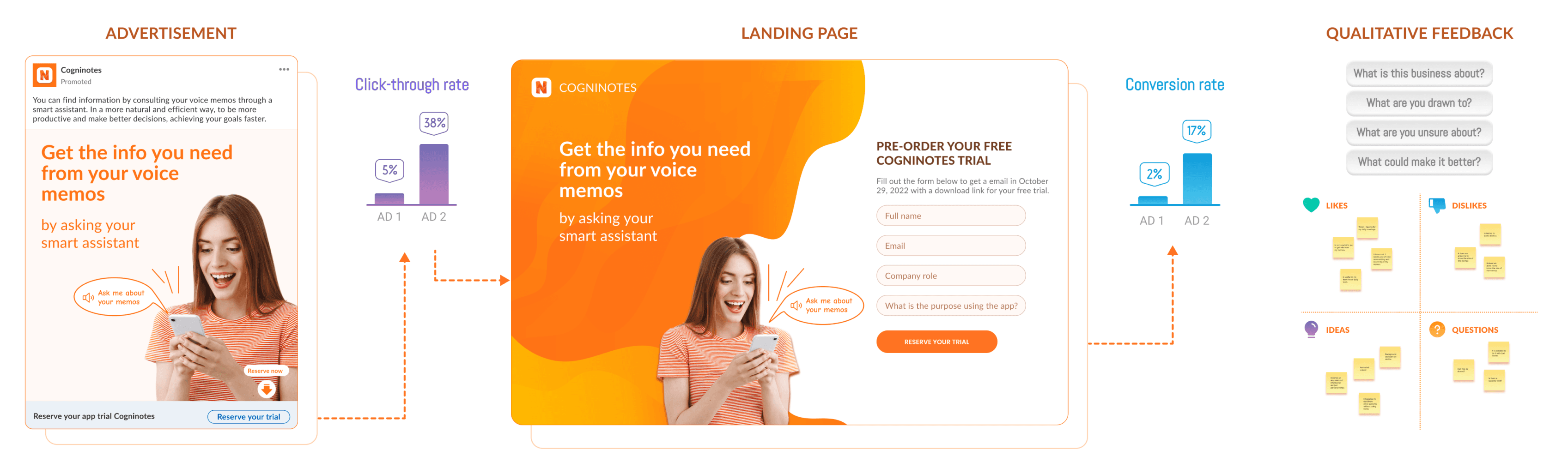
As a result of brainstorming, the team considered two value propositions. I tested both value propositions using the landing page demand test technique by designing a digital ad to measure the click-through rate through CTA interaction. I also designed a landing page linked to the CTA to measure the conversion rate through the trial app reserve. It also allowed me to collect some demographic data and check if the audience pointed to the defined one.
I also collected qualitative evidence for each ad to gain important insights. I conducted silent interviews by handing the ad to people who represent the desired customer. Before I show them the ad, I asked some questions. Then I showed them the ad but without saying anything—only I was listening and observing.
OFFER DESIGN
Offer brainstorming
With some idea of the value proposition, I facilitated a session to define the offer. I first invited the team to do several simple sketches using Crazy 8’s technique of the several offer ideas and include details about customers, their needs, and how the offer connects to the value proposition. We determined that materializing the value proposition in a mobile application could have a greater reach of customers. The team votes for an offer based on criteria such as: connection with the value proposition, feasibility, and greater access to customers

PROTOTYPING AND TESTING OFFER
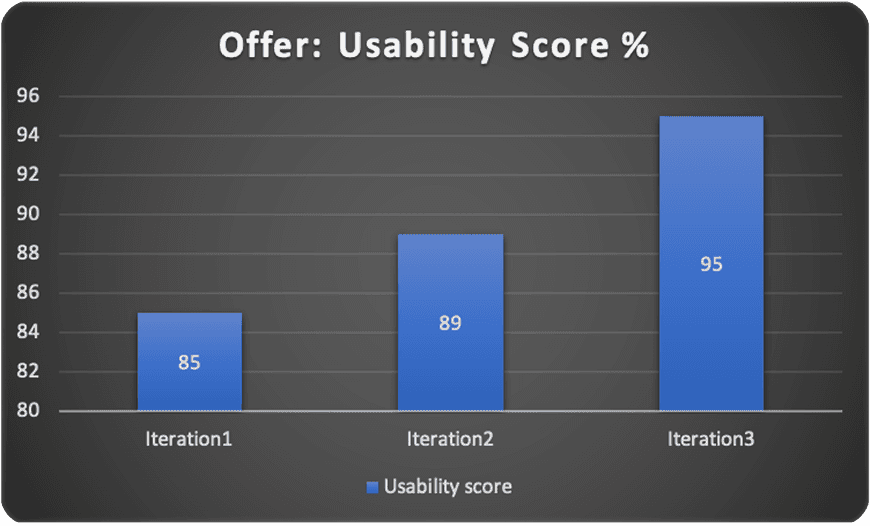
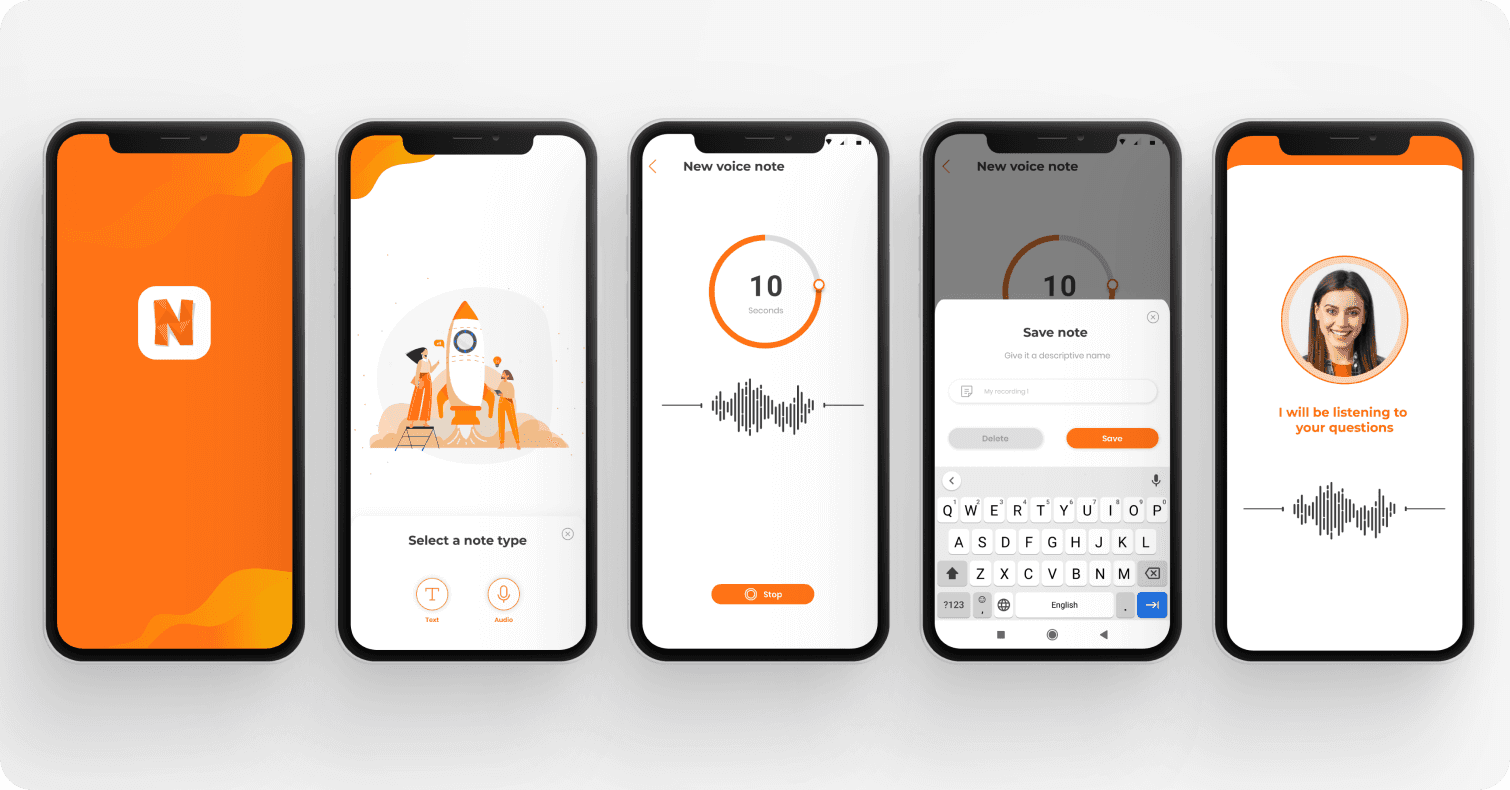
From the idea of the offer that was selected by the team. I designed a high quality prototype to experiment with users of the segment we are targeting and obtain valuable evidence. I ran several unmoderated usability tests using the Maze tool to find out if users could use this offer. The test contained missions to complete, post-questionnaires and open questions, with the aim of collecting qualitative and quantitative information, In total, I did 3 iterations and measured mostly misclick rate, avg success, avg time, and usability score in general.

03. MEASURING THE IMPACT
Combining the business strategy with the design thinking approach, it was possible to design, prototype and test, and iterate the value proposition and the offer. In addition to reducing the risk in the definition of the business and getting to product-market fit faster
GOALS COMPLETED AND FEEDBACK
I led the definition of the revenue and pricing model to validate the most viable value proposition and reduce business risk. Achievements we got:
The offer’s usability score improved to 95% after several iterations.
We achieved a 33% increase in click-through rate and a 15% increase in conversion rate between the two value-proposition prototype proposals.