WEALTH MANAGEMENT PLATFORM
Platform
Web
Work Done
User research, Facilitation, Prototyping, User testing
Team
Product manager, UX/UI Designer, Software engineers, Marketing manager
Sector
Financial
CHALLENGE
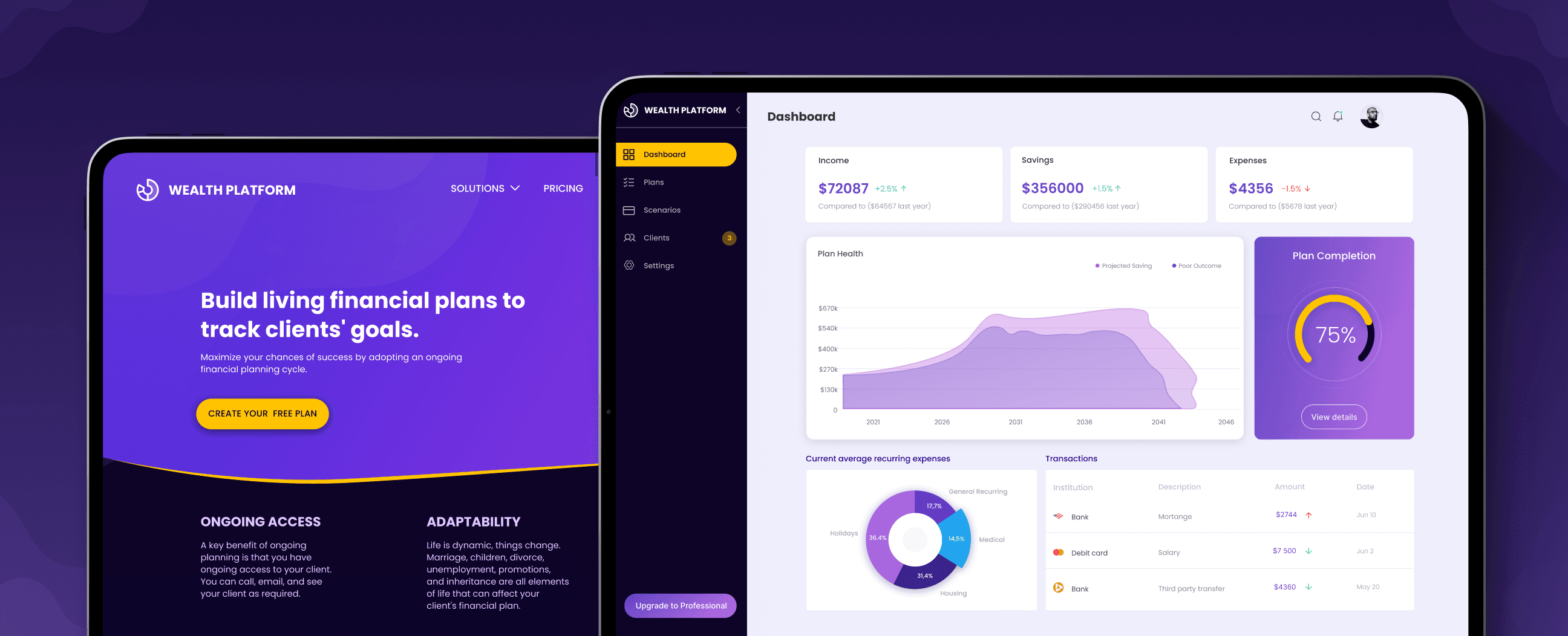
LBW Wealth Management is a company that offers financial advisors services who want to transform the current experience in advising people on how to pursue their financial goals. The financial advisors were struggling to maintain an ongoing financial plan and at the same time establish a fluid interaction with customers over time. The big challenge was to learn fast to discover which is the right product to build and define it as the MVP in 3 months. Where the final result was a web application called Hyphaway. I adopted an Agile UX approach to work in collaboration with an agile scrum team. I started with user research to empathize with potential customers, then I facilitated brainstorming and, finally, I progressed through rapid iterative prototyping and user testing to find out if the solution was the right one.
01. BUSINESS STRATEGY
Understanding the business model
The entire design and development process must be aligned with the business strategy, i.e. vision, target market, expected results, capabilities, etc. I facilitated a kick-off meeting with the different stakeholders to find out what business strategy they have in mind and what information they know so far.
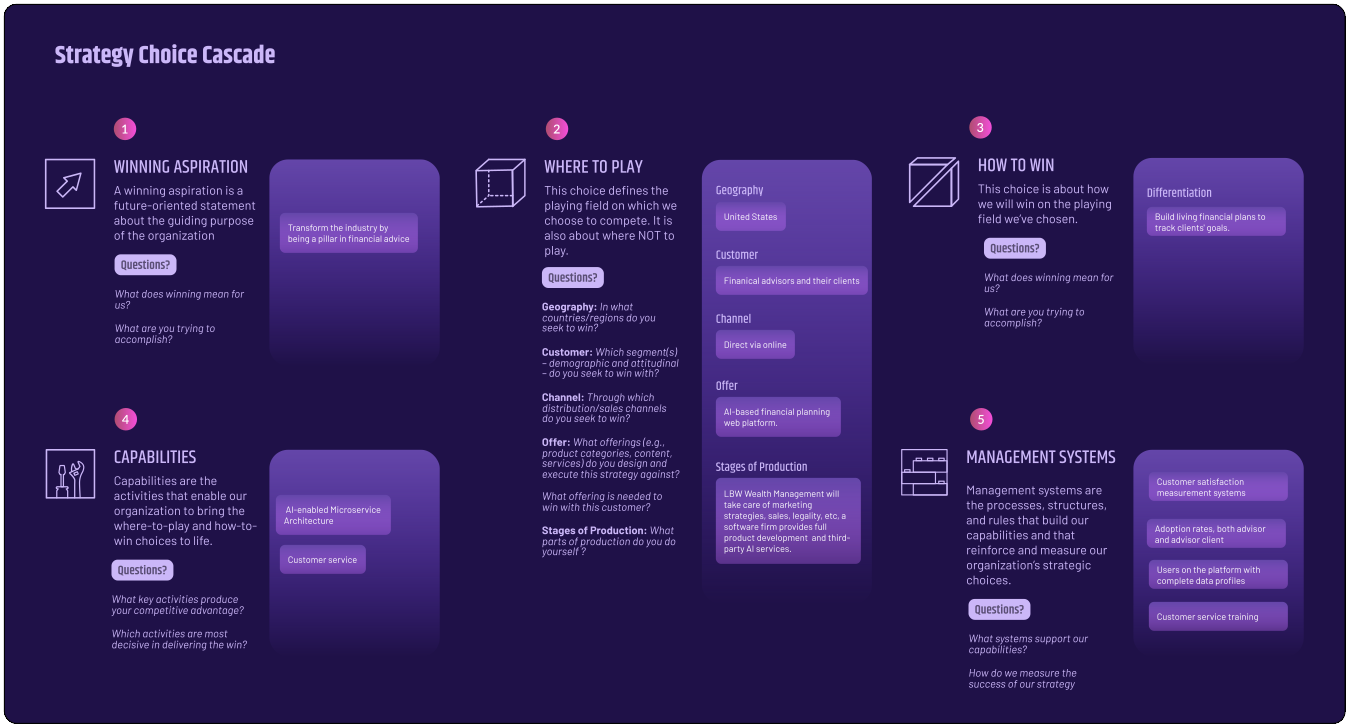
Strategy Choice Cascade
To synthesize the information about the business strategy that the stakeholders had in mind, I used the Strategy Choice Cascade diagram, which is part of the Playing to Win strategic approach. This helped the team to visualize and share the essential components of the current strategy and thus align us during the entire process.
02. USER RESEARCH & SYNTHESIS
Discovering Opportunities
After understanding the different components of the business strategy. The team strategically decided to focus in this first stage on a single user segment, the advisors. Then I started the user research phase to empathize with potential customers.
User interview
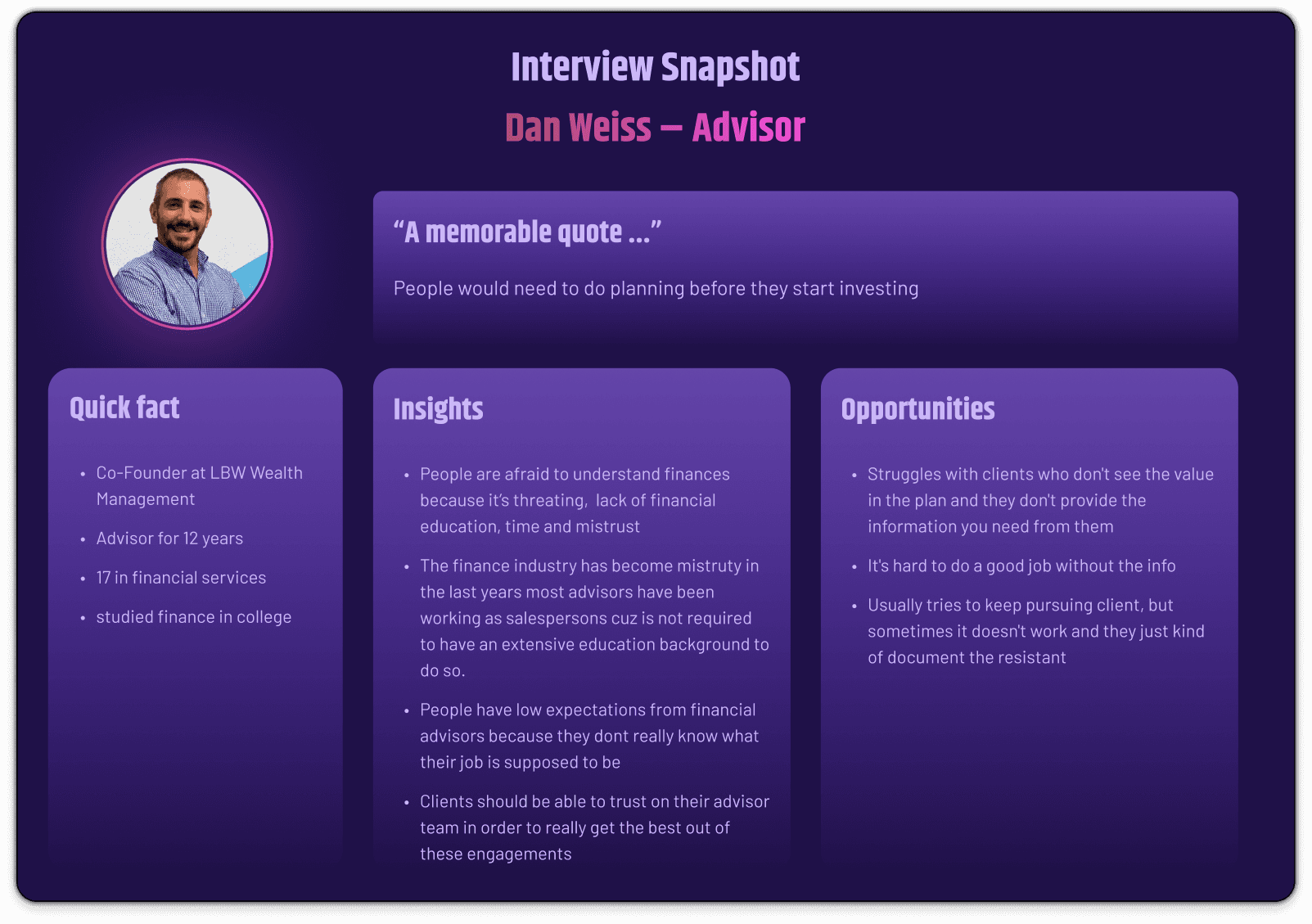
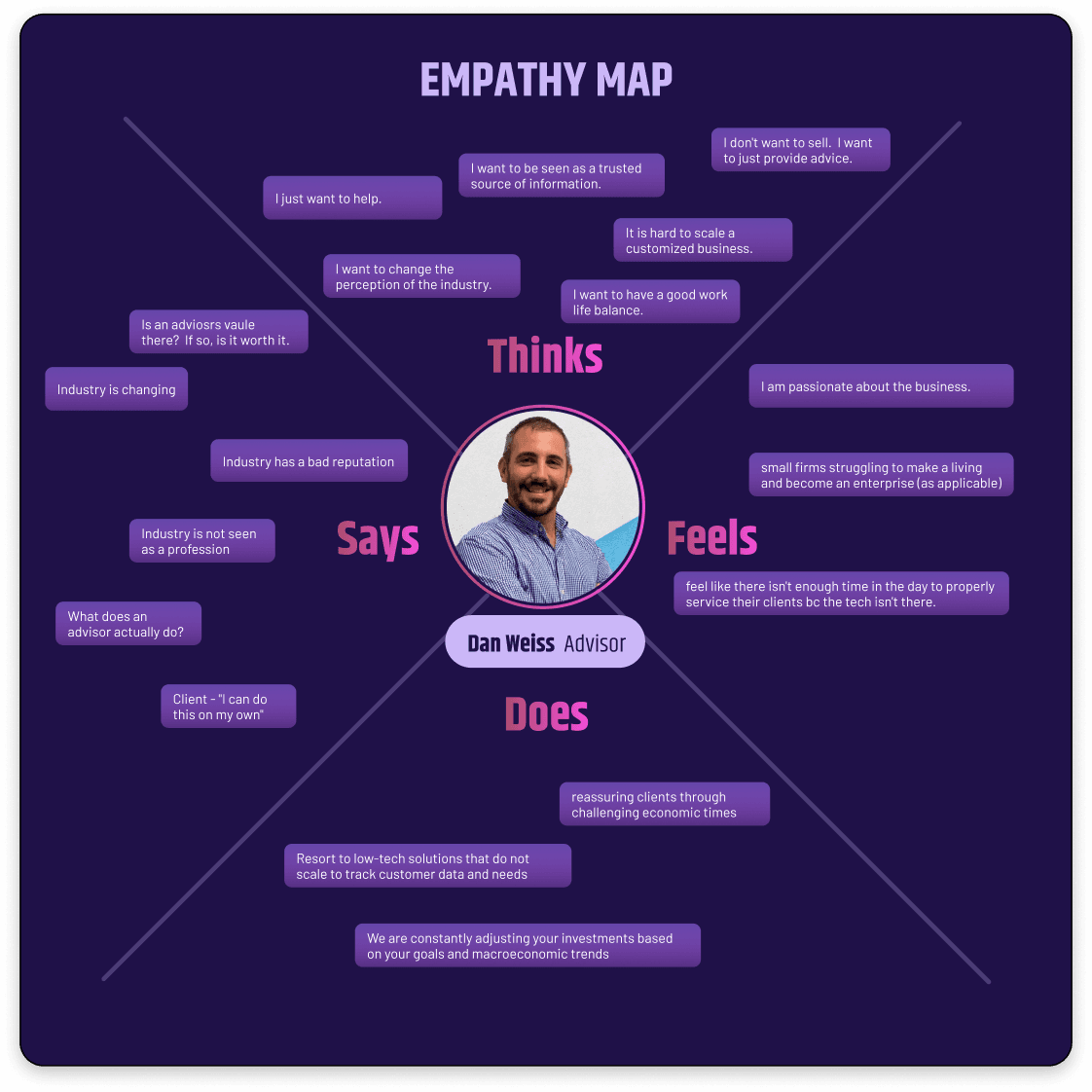
I ran 10 sections of interviews with potential clients to empathize with their realities and obtain opportunities and insights. After each section I immediately synthesized the information into an Interview Snapshot template, focusing on insights and opportunities, as well as quick facts. I also complement this synthesis with an empathy map for each user to help me understand better their mindset and behavior.
Persona
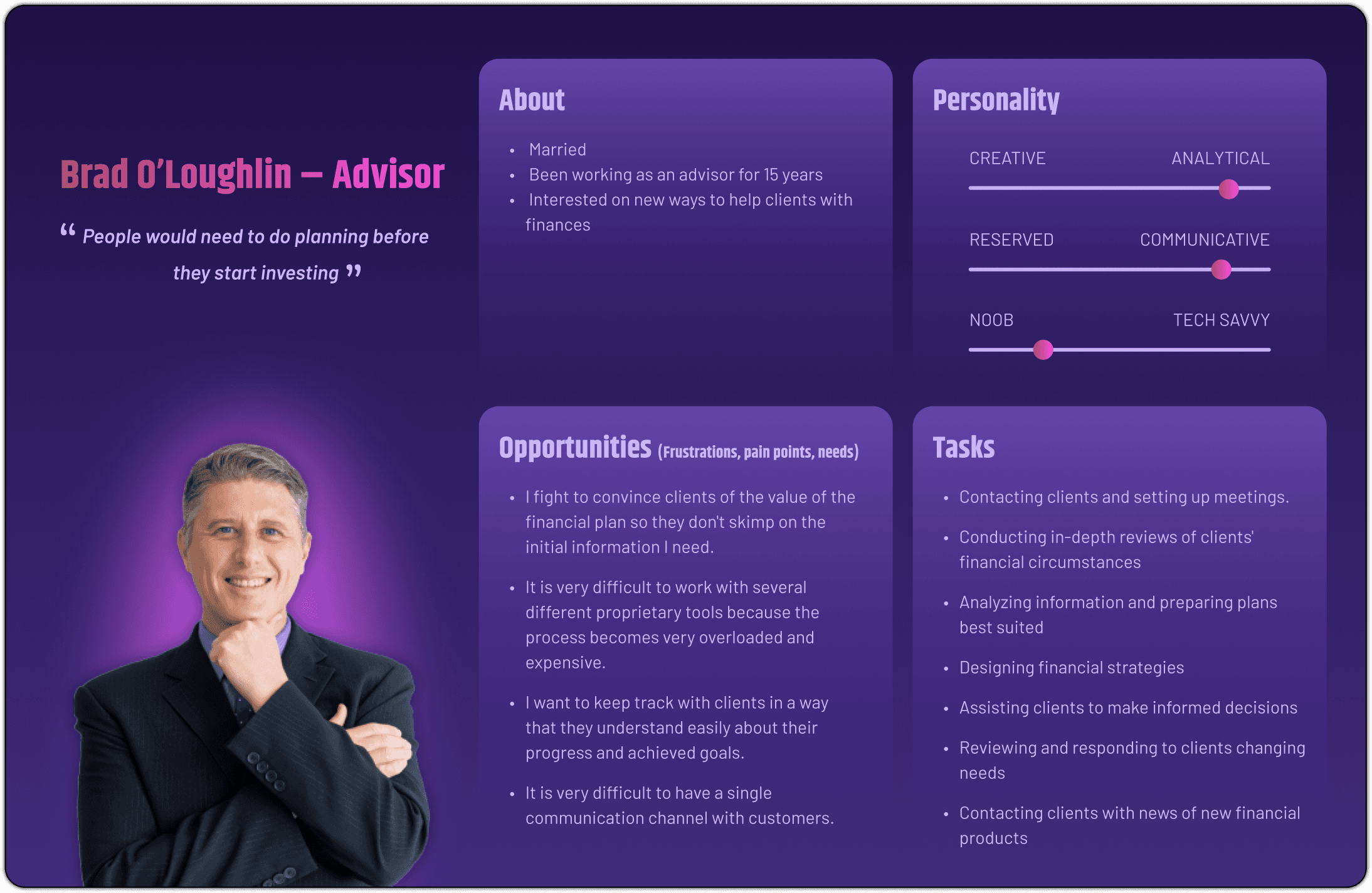
With all the information collected previously from the interviews, I began to associate and group similar patterns and behaviors, then I synthesized them into a persona, and share it with the team to have a shared understanding.
Customer journey map
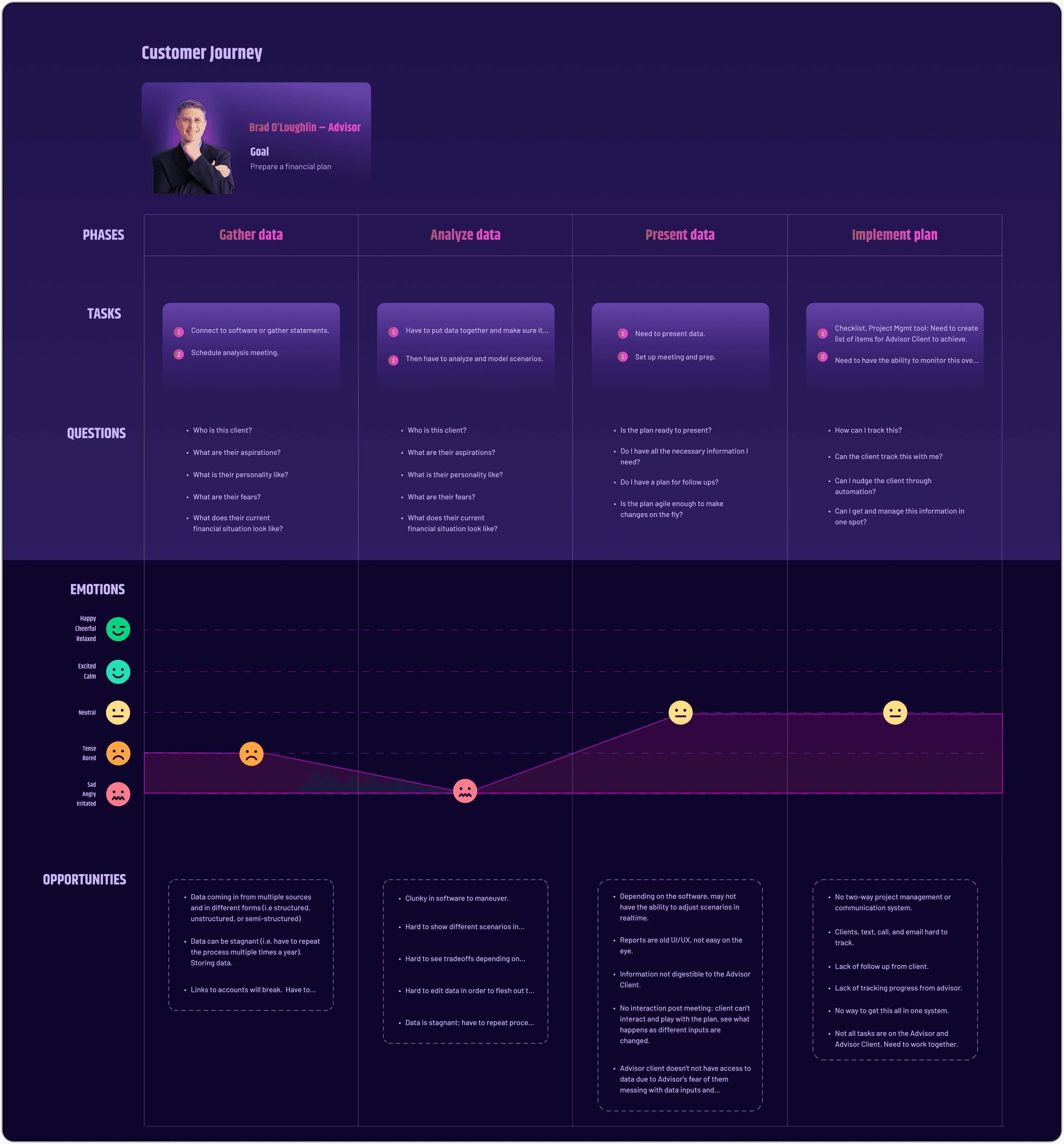
I then created a journey map to represent the current experience of our main persona "Advisor". The idea was to visualize the different stages of experience to achieve a common goal. Then, watch how he behaves emotionally at each touch point. Finally, I analyzed what opportunities are involved in each phase.
OPPORTUNITY ASSESSMENT
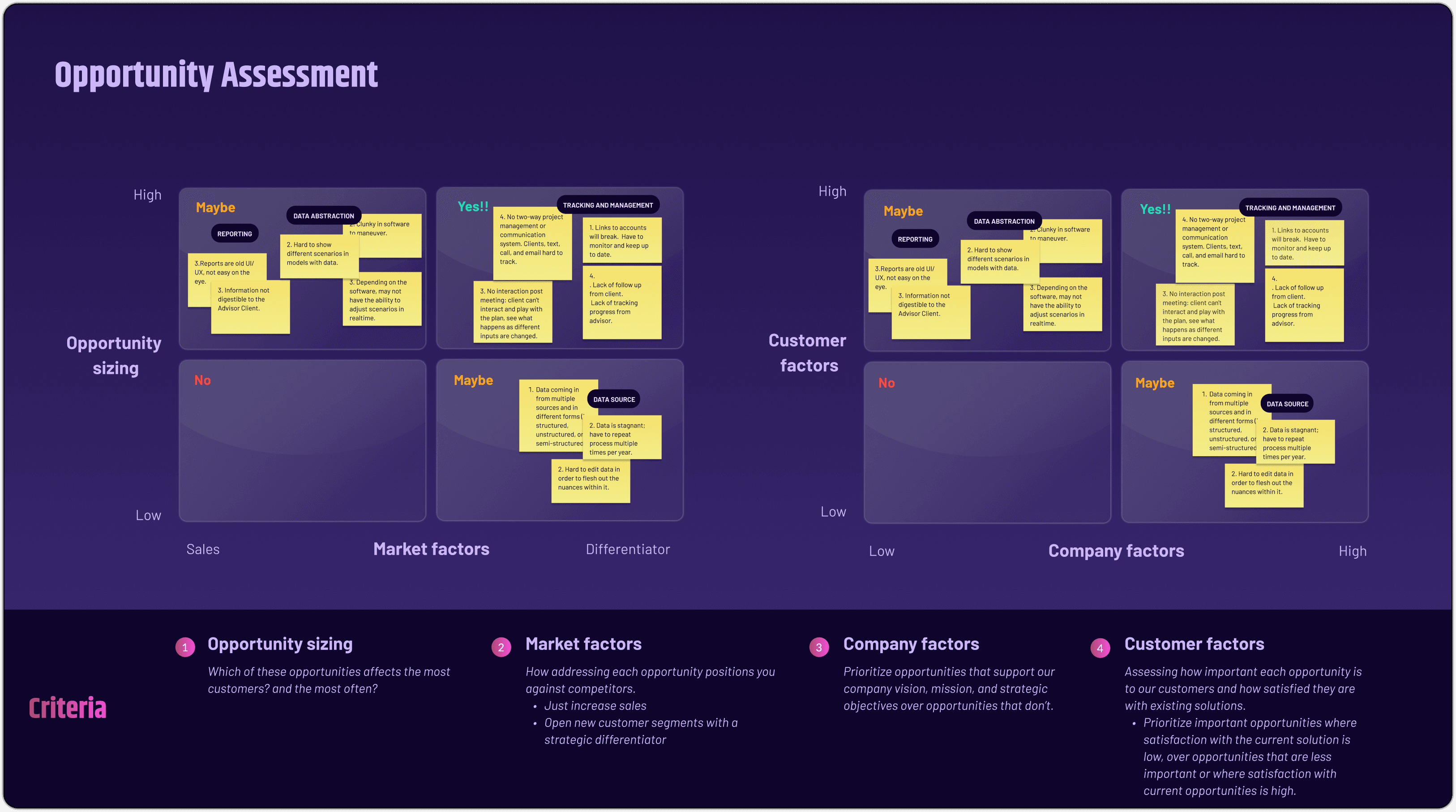
After detecting the friction points in the customer's current experience and their opportunities in each phase, I facilitated a workshop to assess those opportunities and prioritize them to frame the design work. I built two prioritization matrices, with the following criteria opportunity sizing, market factors, customer factors, and company factors. When making decisions, the areas of expertise of each team member were taken into account. I encouraged the team to have critical thinking.
03. IDEATION
Exploring and selecting the best ideas so far
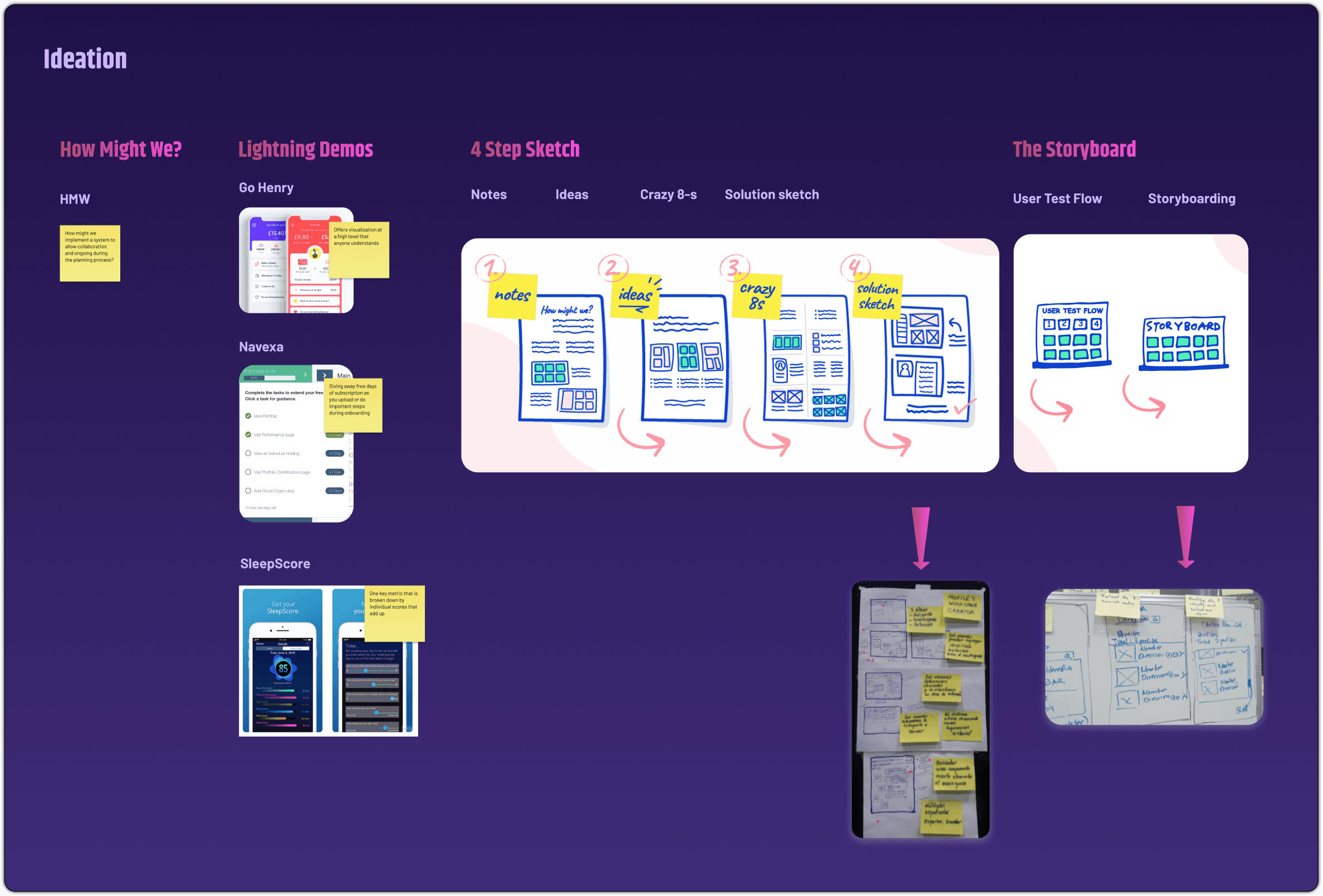
After focusing on which opportunities we should satisfy, I began with the ideation phase in a collaborative way.
1- Reframing the problem (HMW)
Based on the prioritized opportunities, I framed the challenge in a How Might We format to motivate the team to generate ideas and encourage creativity.
2- Inspiring (Lightning Demos)
I ran the Lighting Demo exercise to inspire the team. Each team member selected 3 examples of products or services that she thought could use as inspiration and wrote a big idea for each one.
Then I asked everyone to present their ideas one by one.
3- Drawing (4 Step Sketch)
After encouraging inspiration from the team I ran the four-step sketch exercise that helps people to create well-formed concepts through a structured process that includes: reviewing key information, starting design work on paper, considering multiple variations, create a detailed solution.
4- Storyboarding
From the winning solution, I used a storyboard to go from the winning concept to the prototype. To speed up the process, I told the team to write a basic version of their own storyboard (User Test Flow), and then the team voted on which version should be storyboarded and prototyped.
Brand & Information Architecture
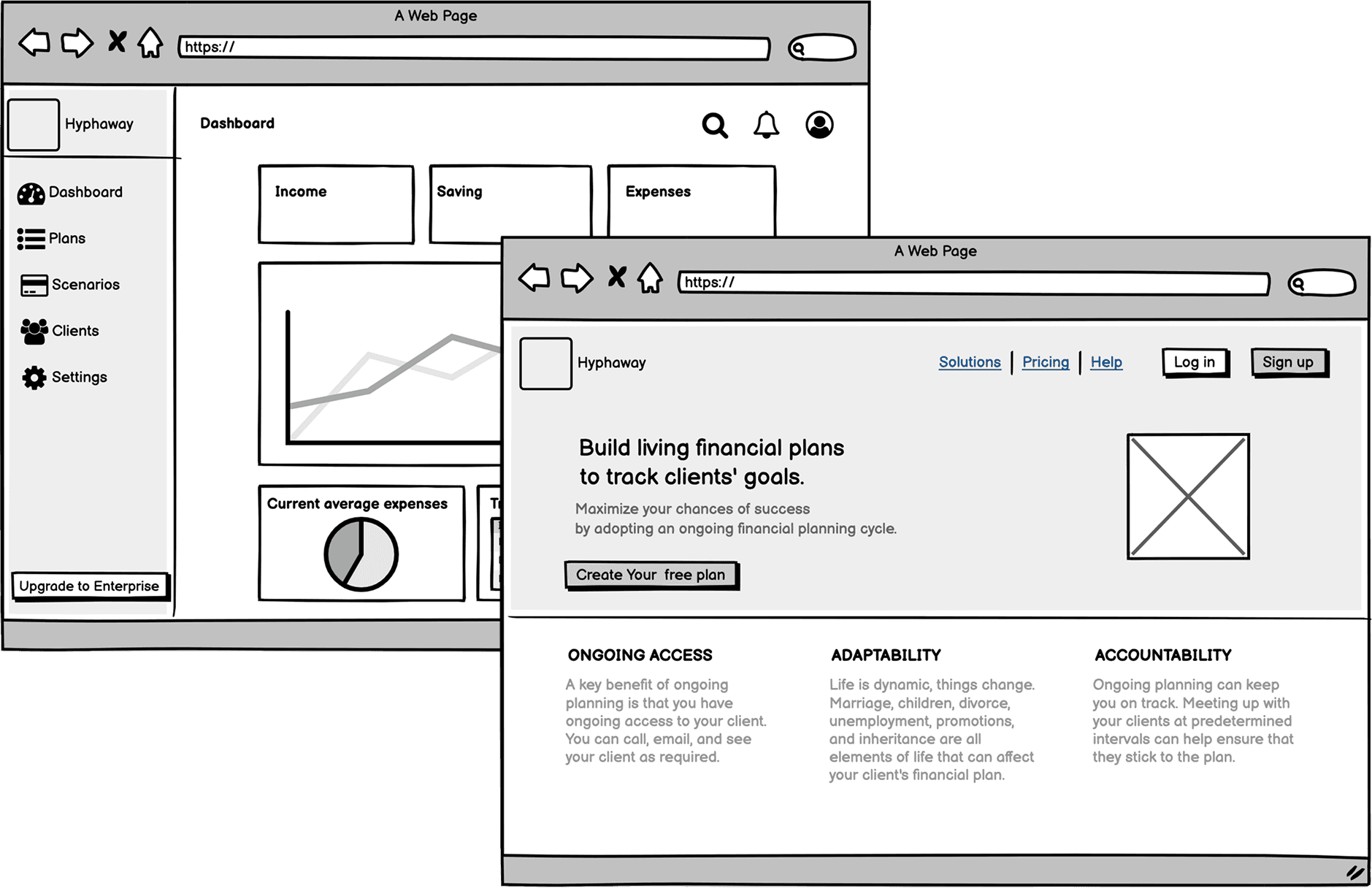
From the learning of the business, the users and the solution proposal. I ran a Minimum Viable Brand Workshop to develop an initial brand concept ,definding the name, values, and personality of the brand. Then I designed a tone and voice proposal to enable writing microcopy in all user interfaces. From the storyboard and brand concept, I began to develop the information architecture concentrating on the labeling, organization, and hierarchy of information. I used wireframes to quickly represent the different screens and areas of content.
04. PROTOTYPING
Design the MVP to test with users
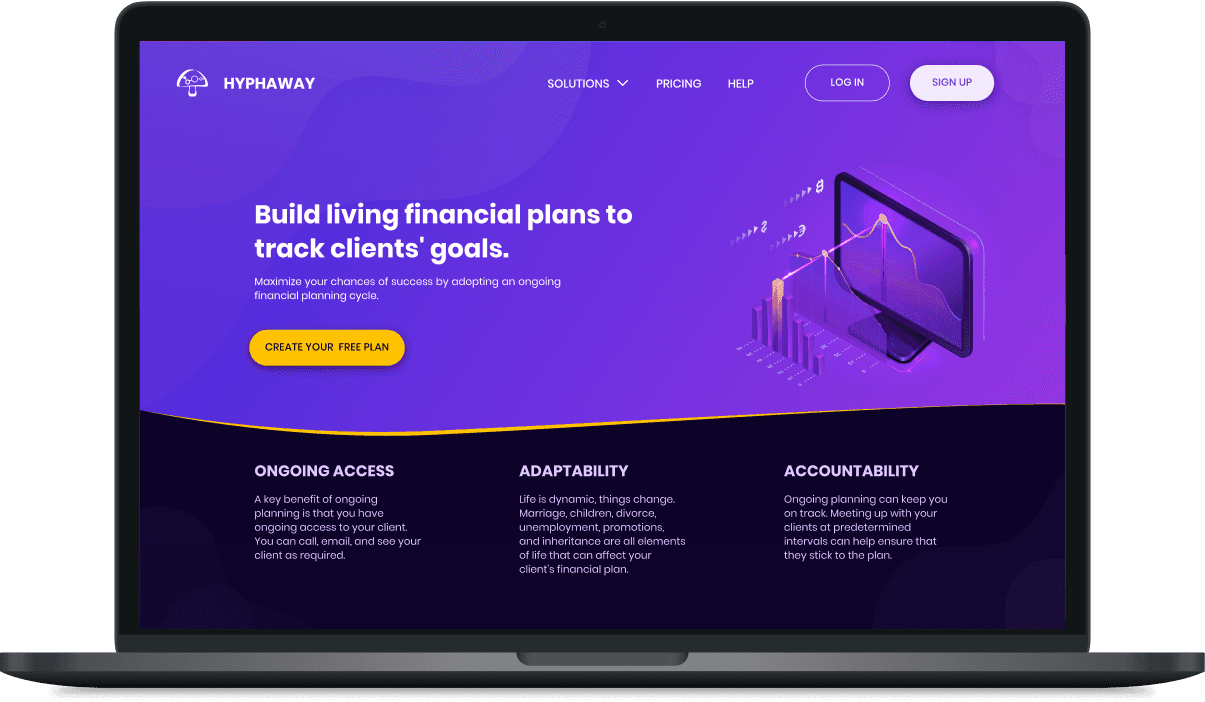
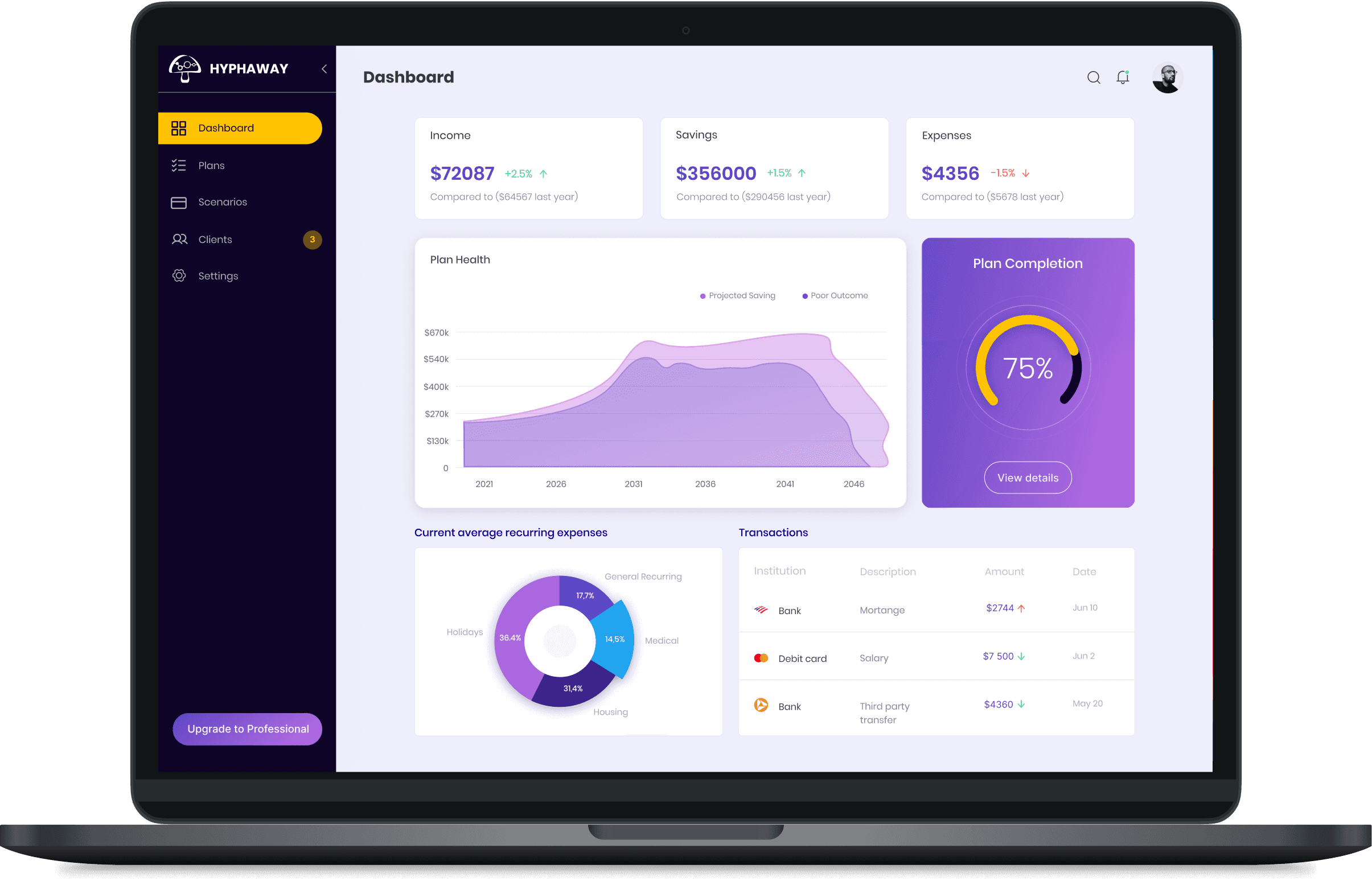
With the information architecture defined, I proceeded to build a high-fidelity prototype that simulates the MVP.
Prototyping in figma
I built a high-fidelity interactive prototype using the Figma tool, to test it later with users. I express the characteristics of the brand as well as the foundation of the design system.
05. TESTING
Test the ideas with users
After I had designed the hi-fi prototypes there were questions to be answered.
Will the customer buy this, or choose to use it? - Value
Can the user figure out how to use it? - Usability
Can we build it? - Feasibility
Does this solution work for our business? - Viability
Testing Usability
Once I designed the hi-fi prototype, the team needed to learn fast. The first question was about value but first, it was necessary to learn about usability:
Can the user figure out how to use it?
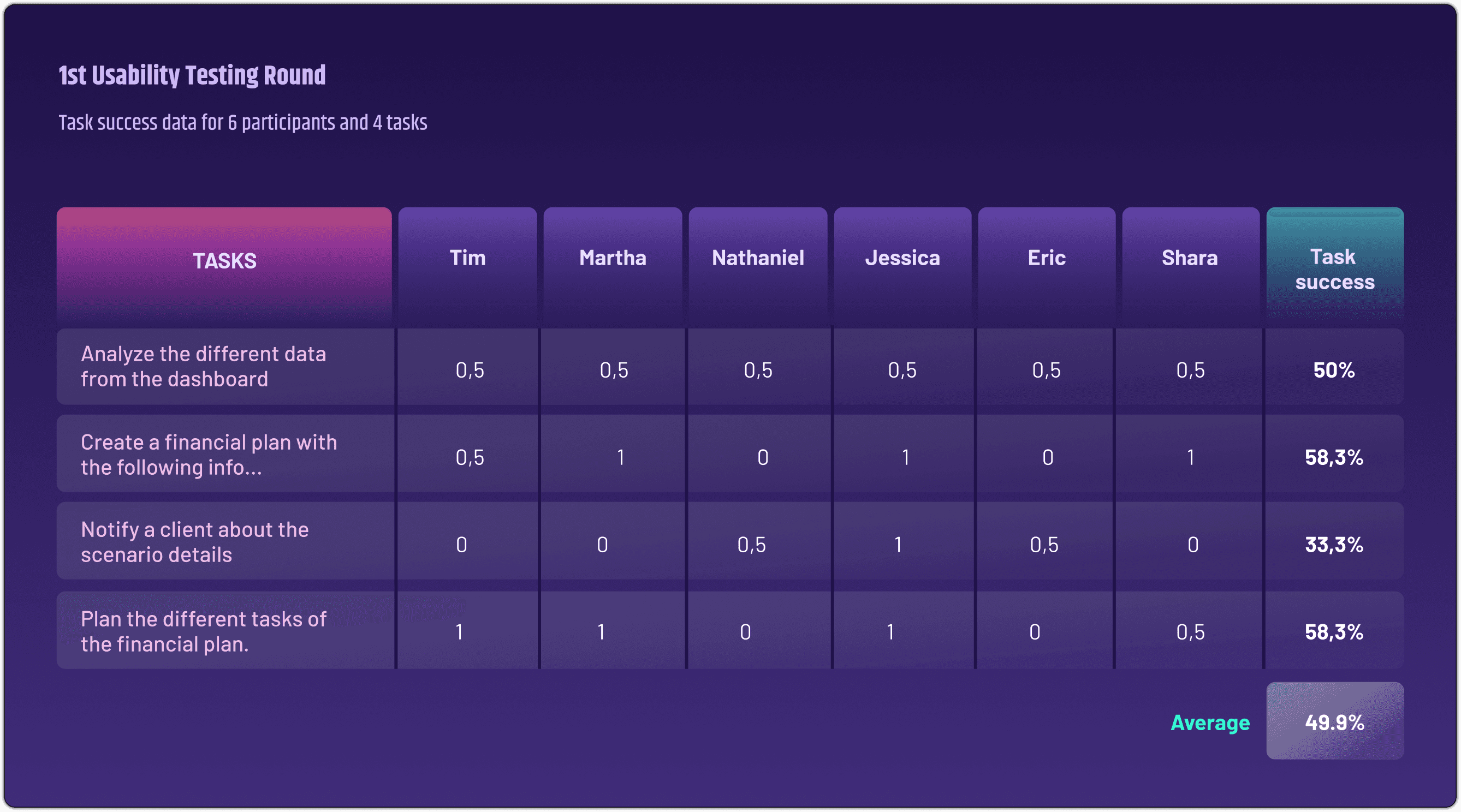
I ran several user test sessions, in each session I first did a usability test before the value test because it depends on the user first understanding what the solution is about and how it works. During each session, I first started with a short interview to make sure the user has the problem we think he has, and how he solves these problems today.
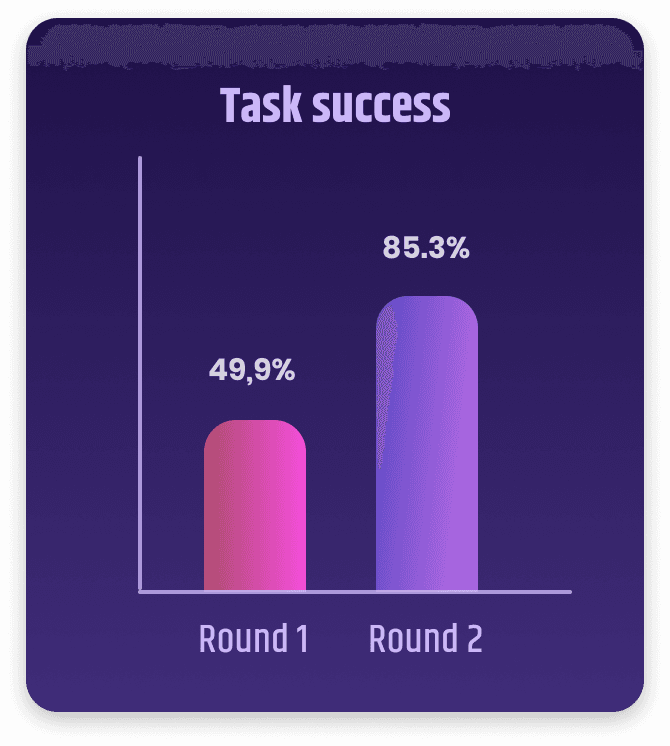
Then I provide them with the tasks to execute in the prototype and motivate them to follow the protocol of thinking out loud and thus collect their feedback. Additionally, I collected metrics like Task Success to measure performance. In total I ran 2 rounds of usability testing to improve the performance of Task Success metrics.
Testing Value
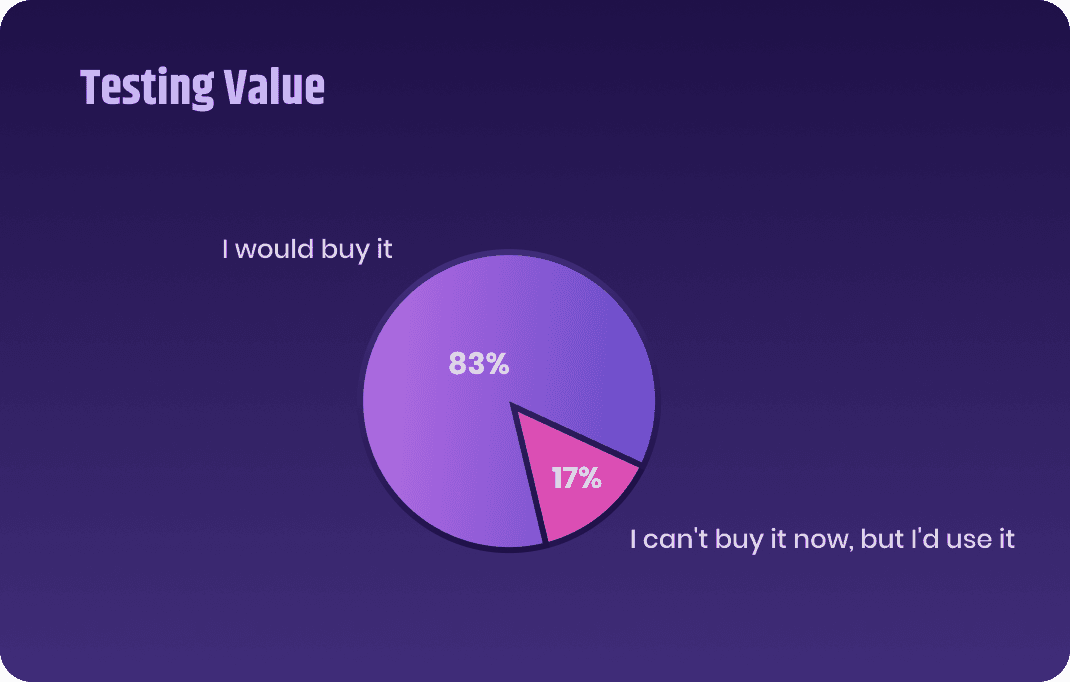
To answer: Will the customer buy this, or choose to use it? Immediately after finishing the usability test session, I did the value test following the Using Money to Demonstrate Value technique, to do this I checked if the user would be willing to pay for the product, observing their behavior of wanting to pay. That for this case 83% of the participants were willing to pay it. The rest of the participants said they could not pay it at this time for reasons related to the expenses that they were going through. But they did show interest in choosing it to use.
Testing Feasibility
To aswer: Can we build it? It was necessary to test the feasibility in some way. The engineers, by participating collaboratively in the process, had an idea of the feasibility of the solution, but there were some questions related to machine learning technologies, so they decided to do a proof of concept to test these technologies. They created a feasibility prototype to test these technologies.
Testing Business Viability
To aswer: Does this solution work for our business?
It was necessary to understand each of the company's relevant constraints and to help protect company's revenue, reputation, employees, and customers. The product manager worked with other company areas such as marketing, sales, customer success, finance, legal, etc. to find ways to address their concerns.
06. MEASURING THE IMPACT
Results
Through iterative and agile experimentation, it was possible to answer several questions about the proposed solution, starting with value, usability, feasibility, and viability.
Goals completed and feedback
It was possible to increase the task success from 49,9% to 85.3% in 2 rounds. The willingness of 83% of the participants to pay for the solution was verified, demonstrating its value. As well as the feasibility on the part of the engineers and the viability on the part of the company.
Currently, the proposal is under development and I am working on another design sprint to satisfy other opportunities.